
Not every company selling HVAC coils actually makes them, and that distinction matters far more than most buyers realise until something goes wrong. This is true for anyone comparing HVAC chiller manufacturers in Oman side by side with general equipment resellers. The two often look identical on a quotation but operate very differently behind it. A supplier reselling coils built by a third party can rarely tell you the exact tube wall thickness, fin material, or brazing method used, because that information sits with the original manufacturer, not the reseller.
When you’re specifying a chiller for a facility that has to run continuously through Gulf summers, that gap in technical accountability becomes a real operational risk. This article breaks down the practical difference between an HVAC manufacturer and an HVAC supplier, why coil origin directly affects chiller performance, and what to verify before placing an order. For buyers comparing HVAC chiller manufacturers in Oman against resellers and trading houses, this distinction is often the difference between a system that performs for a decade and one that needs early coil replacement.
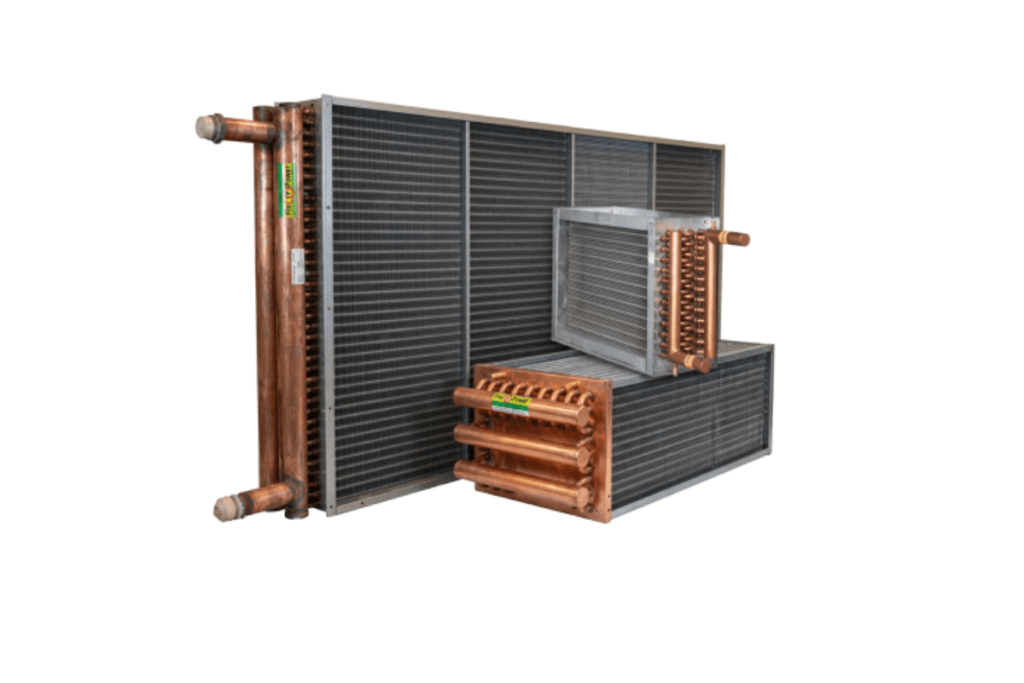
Manufacturer vs Supplier: The Core Difference
| Aspect | HVAC Manufacturer | HVAC Supplier / Reseller |
| Coil production | Designed and built in-house | Sourced from third-party factories |
| Material specification control | Full control over tube, fin, and header material | Limited to what the original manufacturer discloses |
| Custom design capability | Can engineer coils to exact load and space requirements | Usually limited to catalogue or near-standard sizes |
| Warranty accountability | Direct, since the manufacturer built the part | Often passed through, with less clarity on root cause |
| After-sales technical support | Access to original design engineers | Limited to general product knowledge |
This isn’t a criticism of suppliers as a category, many operate honestly and pass on genuine manufacturer documentation. The issue arises when a buyer assumes technical accountability exists where it doesn’t, because the coil’s actual origin was never disclosed. This is exactly the kind of gap buyers should rule out early when shortlisting HVAC chiller manufacturers in Oman for a new installation.
Why Coil Origin Directly Affects Chiller Performance
A chiller’s cooling capacity, energy efficiency, and service life depend heavily on the coil inside it, the tube material, fin spacing, and brazing quality determine how well it rejects heat and how long it resists corrosion in coastal or high-humidity environments. When a manufacturer builds the coil themselves, they can adjust fin density, tube wall thickness, and coating specification to match the specific climate and duty cycle of the installation. A reseller working from a fixed catalogue generally can’t offer that flexibility, since the coil design is already fixed by whoever manufactured it upstream. This is a key reason serious buyers evaluating HVAC chiller manufacturers in Oman look past the price on a quotation and ask directly who engineered and built the coil going into the unit.
What You Lose When You Buy From a Reseller Instead of a Manufacturer
Buyers evaluating HVAC chiller manufacturers in Oman against general trading companies typically give up several practical advantages the moment they choose a reseller instead:
- Design flexibility: a reseller can rarely modify fin spacing, tube gauge, or header configuration to suit unusual load or space constraints
- Root-cause accountability: when a coil fails, a reseller often has to escalate the question back to an overseas factory, extending resolution time
- Material traceability: manufacturers can usually produce mill certificates and batch records directly; resellers depend on whatever documentation was passed to them
- Faster turnaround on custom or replacement coils: in-house production means a manufacturer can prioritise urgent orders without waiting on an external factory’s schedule
Custom vs OEM Coils: What Buyers Should Know
Coils generally fall into two categories, and it’s worth knowing which one you’re actually being offered:
- OEM/catalogue coils: standard sizes and configurations built for high-volume production, suited to common, predictable applications
- Custom-built coils: engineered to a specific chiller footprint, load requirement, or replacement specification, typically only available directly from a manufacturer with in-house design capability
Buyers comparing HVAC chiller manufacturers in Oman for industrial or process cooling applications often need the custom route, since standard catalogue coils rarely match the exact space and load constraints of an existing plant retrofit.
Questions to Ask Before You Order
Before confirming a chiller or coil order, it’s worth getting direct answers to the following:
- Is the coil designed and manufactured in-house, or sourced from a third-party factory?
- What tube and fin materials are used, and are they suited to the site’s humidity and air quality conditions?
- Can the manufacturer provide mill certificates or material traceability documentation for the batch?
- Who handles warranty claims directly, and what is the typical resolution timeline?
- Can the coil be customised to an exact load or space requirement if the standard catalogue size doesn’t fit?
A supplier who answers all five clearly and without deflecting to “the factory” is generally the more reliable long-term partner.
Conclusion
The difference between an HVAC manufacturer and an HVAC supplier isn’t just a matter of terminology, it determines how much control you have over coil specification, how quickly problems get resolved, and how well the equipment performs over its working life in demanding Gulf conditions. Buyers who ask directly who builds the coil, rather than assuming the answer, avoid most of the performance and accountability issues that surface later. Viking Emirates Radiators manufactures coils, chillers, and heat exchange equipment in-house from our Sharjah facility, with over 33 years of experience serving industries across the UAE and the wider Gulf. Get in touch with our team at +971 55 654 9544 to discuss coil specifications for your next project.