A cooling tower works by letting water evaporate, so it will always consume water. The question is how much more it uses than it needs to. In a country where water is a managed resource, the difference between a well-run tower and a neglected one shows up on the utility bill and in compliance records. Drift, over-frequent blowdown, hidden leaks and poor controls are the usual culprits. This guide breaks down where the water goes, which fixes cut the most, and what to ask industrial cooling tower manufacturers about design before you buy or refurbish.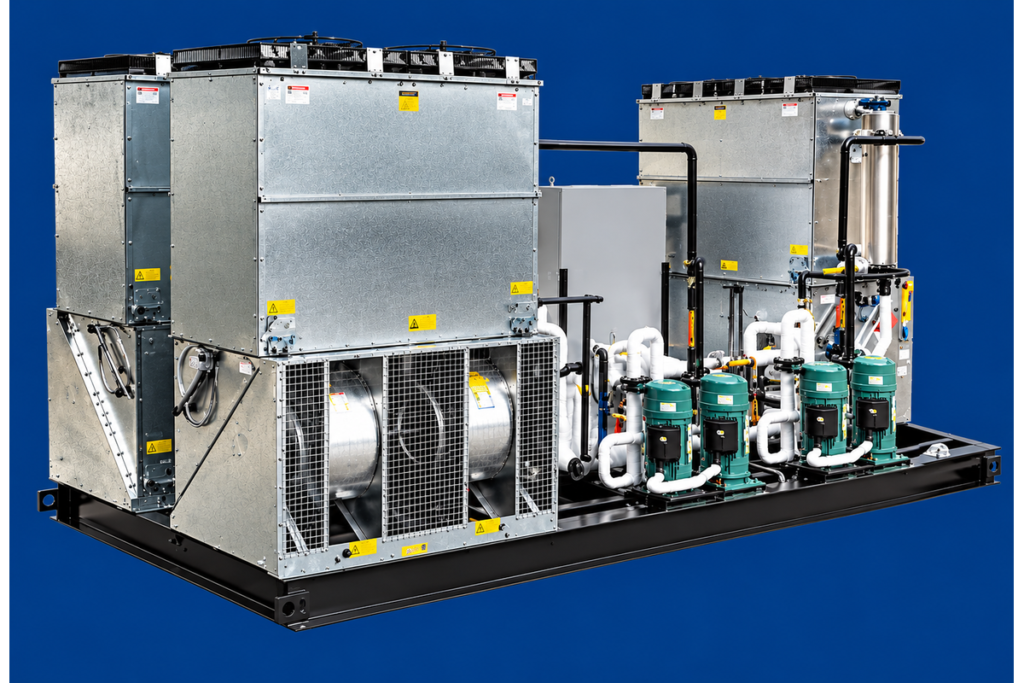
Where the Water Goes
The cooling tower water balance is: make-up water equals evaporation plus blowdown plus drift. Each loss behaves differently:
| Loss | What it is | Can you reduce it? |
| Evaporation | Water that leaves as vapour and carries heat away | Only by reducing the heat load |
| Blowdown | Deliberate discharge to control dissolved solids | Yes, by running more cycles safely |
| Drift | Fine droplets carried out of the tower by airflow | Yes, with drift eliminators and good maintenance |
| Leaks and overflow | Basin overflow, float valve faults, valve leaks | Yes, and they should not occur at all |
Evaporation equals roughly 1 percent of the recirculating water flow for every 5.6°C of temperature drop across the tower. Cooling towers are also often the largest water user in institutional and commercial facilities, at 20 to 50 percent or more of total water use. A tower is therefore the right place to start a water review.
Cutting Drift Losses
Typical drift is 0.05 to 0.2 percent of the tower flow rate, and modern drift eliminators can reduce it to less than 0.005 percent. That is a small share of the total, but drift carries treated water and chemicals out of the tower, and it can wet nearby surfaces and air intakes.
Practical steps:
- Confirm drift eliminators are fitted. Dubai Municipality’s Legionella guideline states the cooling tower must be fitted with drift eliminators.
- Inspect them regularly. Look for displaced, damaged, scaled or missing sections that let droplets bypass the blades.
- Check airflow and water flow. Running well above design flow raises drift.
- Site towers carefully. The same guideline requires drift to be directed away from air intakes, openable windows and entrances.
- Repair casing gaps and damaged fill, which allow water to escape.
When you ask industrial cooling tower manufacturers about drift, request the eliminator type, the guaranteed drift rate in writing and the test basis for it.
Cutting Blowdown With Cycles of Concentration
Blowdown is the main lever for saving water. Cycles of concentration compare the dissolved solids in the tower water with those in the make-up water. More cycles mean less blowdown and less make-up. Many systems run at two to four cycles and six or more may be possible, and increasing cycles from three to six reduces make-up water by 20 percent and blowdown by 50 percent.
| Approach | Effect |
| Raise cycles carefully | Less blowdown and make-up water |
| Add a conductivity controller | Blowdown only when conductivity passes a set point |
| Improve water treatment | Allows higher cycles without scale or corrosion |
| Add side-stream filtration | Removes silt and suspended solids |
| Soften make-up water | Helps where hardness limits cycles |
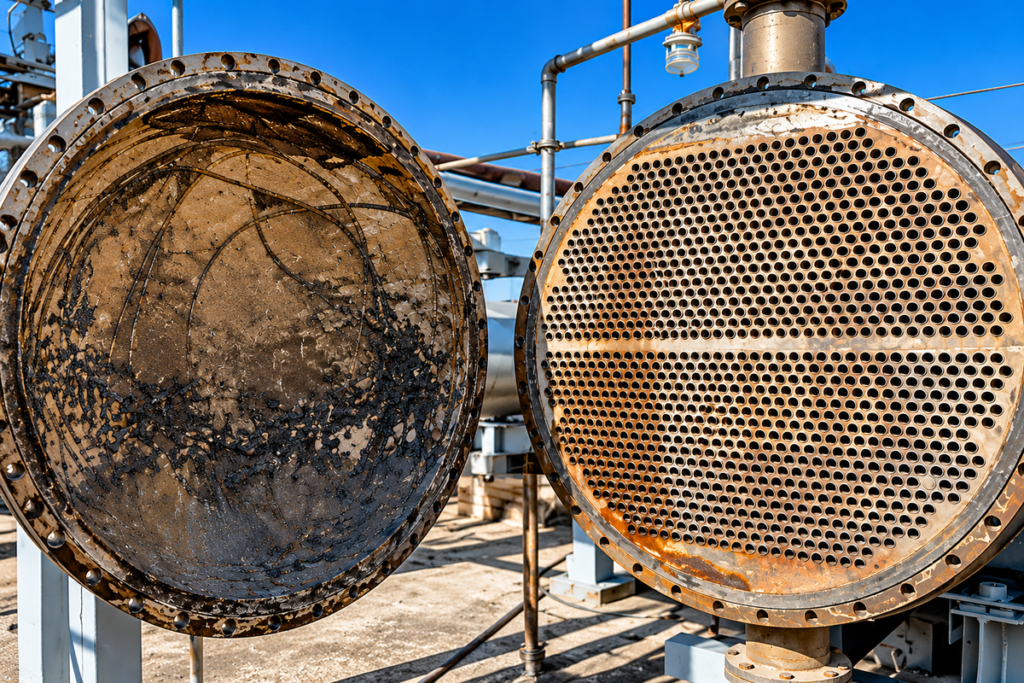
There is a limit. Higher dissolved solids can cause scale and corrosion, so the practical ceiling depends on your make-up water quality and treatment chemistry. Raise cycles in steps and watch for deposits.
Meter, Log and Compare
You cannot cut what you do not measure. Good practice includes:
- Flow meters on make-up and blowdown lines.
- Conductivity measurement of make-up and tower water.
- A check that the make-up-to-blowdown flow ratio matches the conductivity ratio. If the two diverge, look for leaks or unauthorised draw-off.
- A regular log of flows, conductivity and cycles, so drift in performance shows early.
Use Alternative Make-Up Water
Some sites can reduce potable water demand with other sources. Air handler condensate, pretreated process effluent and high-quality reclaimed wastewater are options that can often supplement make-up water. Air handler condensate has a low mineral content and peaks when tower loads are highest, which makes it a natural fit for buildings with large air handling units. Any alternative source needs a water analysis and treatment review first.
Keep the Savings Safe: Dubai Municipality Requirements
Saving water must never compromise water safety. Dubai Municipality’s Technical Guidelines for Legionella Control in Water Systems set requirements that apply to cooling towers and evaporative condensers in Dubai. Key points from the guideline:
- Risk assessment: Carried out at least once a year, and reviewed when the system changes.
- Biocide dosing: The cooling water system and its make-up tanks must have an automatic biocide dosing device that works all year.
- Inspection: The treatment system is inspected at least monthly by a competent person.
- Cleaning: The tower, tanks, pumps, pipes and fittings are emptied, cleaned and disinfected at least every six months, and whenever Legionella is detected.
- Testing: Legionella testing is quarterly and aerobic count testing monthly, using EIAC-accredited laboratories.
- Records: Logs of disinfectant residual and test results must be available for inspection.
What to Look for in the Tower Itself
Design choices set your water use for the life of the tower, so involve industrial cooling tower manufacturers before the specification is fixed, not after the quote arrives. Viking’s cooling tower page describes high-efficiency fill that resists scaling and clogging in harsh water, balanced fans with motor configurations optimised for cooling at low power consumption, corrosion-resistant materials with anti-corrosive treatments, and towers built to fit specific footprints or height limits. The page does not list tower types or capacities, so request those with any quotation.
Questions for industrial cooling tower manufacturers:
- What drift eliminator is fitted, and what drift rate is guaranteed?
- What make-up water quality does the design assume, and what cycles can it support?
- How is the fill designed to resist scale and fouling?
- Which materials and coatings suit our water and coastal air?
- Can the layout allow access for cleaning and inspection?
- What spare parts and support are available locally?
Where Smaller Heat Loads Fit
Not every heat load needs a tower. Some oil, water or hydraulic cooling duties can use a standalone air-cooled unit that uses no water at all. Viking’s Custom Coolers are designed and built to fit specific machinery, with materials chosen to suit the fluid and environment. Moving a small load off the tower can cut make-up demand, though the savings depend on the load. Good industrial cooling tower manufacturers will tell you honestly when a tower is not the right tool for a given duty.
A Water-Saving Checklist
- Meter make-up and blowdown, then log them weekly.
- Inspect drift eliminators, fill and casing.
- Check for leaks, overflow and float valve faults.
- Set a conductivity controller to a target agreed with your treatment provider.
- Raise cycles in steps and watch for scale.
- Test alternative make-up sources before you use them.
- Review treatment and Legionella records at the same time.
- Ask your supplier for drift and cycle figures in writing.
Conclusion
Cooling towers will always use water, but most can use less. Measure the make-up and blowdown, keep drift eliminators in good order, run more cycles where water quality allows and consider alternative make-up water. Keep every change inside your water treatment and Legionella control plan. Viking Radiators manufactures cooling towers, coolers and heat exchangers in the UAE. Contact us to discuss your site, your water supply and how the right industrial cooling tower manufacturers can help you design or refurbish a tower for lower water use.