
Most cooling systems in UAE industrial, marine, and commercial facilities weren’t designed around what’s currently available in a product catalogue. They were designed around a specific set of operating conditions, often with dimensional constraints imposed by the surrounding structure. When a coil in that system fails and needs replacement, or when a new system is being specified for a non-standard application, the question is always the same: does a standard coil exist that meets these requirements? Getting that question wrong in either direction creates problems: over-specifying with custom coils when a standard coil works costs time and money; forcing a standard coil into a non-standard application creates a system that doesn’t perform as designed.
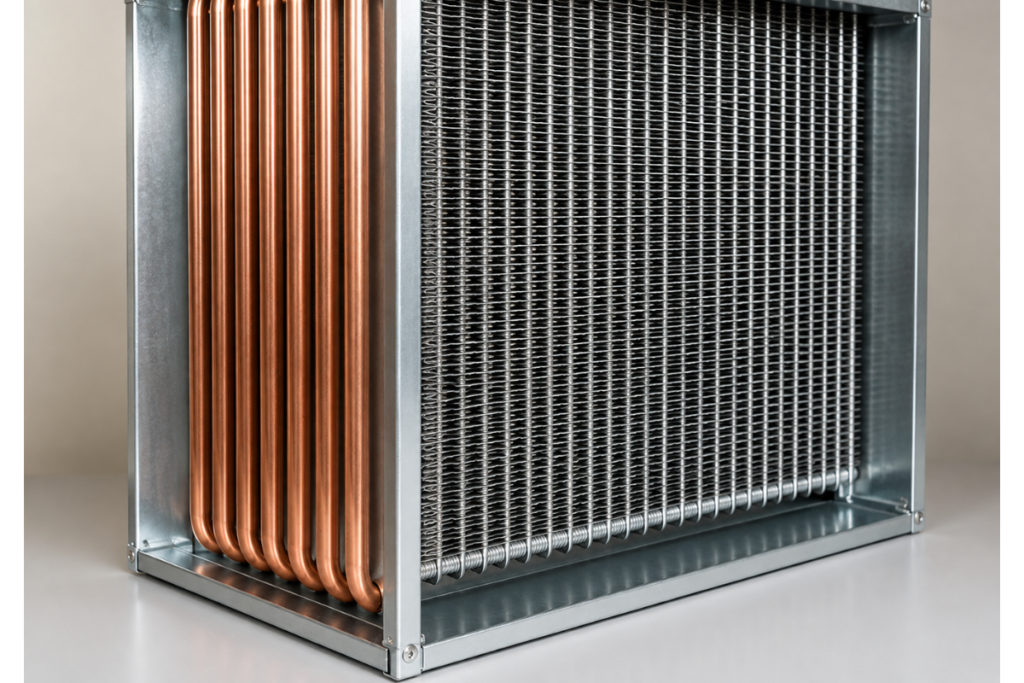
What Standard Coils Cover and Where They Stop?
Standard coils from stock cover the majority of common HVAC replacement applications. If a split AC condenser coil in a residential building fails and the unit is a current-production model from a major manufacturer, a standard replacement coil typically exists and can be sourced and installed quickly.
The standard option stops working in four situations:
- Non-standard dimensions. Older buildings across Dubai and Sharjah contain HVAC equipment imported decades ago that doesn’t correspond to any current standard product size. The AHU in a 1990s-era industrial building might have a coil that’s 1,450mm wide by 620mm tall, not a standard dimension. No catalogue product fits. Custom coils to exact measurements are the only option.
- Non-standard refrigerant or pressure rating. Systems that have been converted to alternative refrigerants, or industrial applications running at non-standard operating pressures, require coils specified to those actual conditions rather than catalogue ratings.
- Specific material requirements. An application involving process cooling in a food production facility may require stainless steel tube and casing material for hygiene compliance. A marine application requires materials rated for saltwater exposure. Standard catalogue products don’t cover these specifications; custom coils do.
- Geometric constraints. A plant room with a specific equipment layout may require an L-shaped or U-shaped coil configuration, or a coil with connections on a specific face that doesn’t match standard port positions. Custom coils can be manufactured to any geometry that the application requires.
What Custom Coils Actually Involve
Custom coils are not a premium version of a standard product; they’re a different manufacturing process. A custom coil starts with the specification: face area, tube diameter, fin spacing, number of rows, circuit configuration, fluid side connections, refrigerant type and operating pressure, material selection for tubes, fins, headers, and casing. Every one of these parameters is set by the application requirement, not by what’s available in a stock range.
The manufacturing process for custom coils includes tube bending, fin stamping, header fabrication, brazing or mechanical expansion bonding, casing fabrication, pressure testing, and leak testing before the coil leaves the facility, ensuring the finished component meets the specification that was used to design the system it will serve.
UAE Applications That Require Custom Coils
- Marine and offshore: Vessels and offshore platforms operating in the Arabian Gulf require cooling coils rated for seawater exposure and the specific temperature and pressure conditions of the application. Standard land-based HVAC coils don’t provide the corrosion resistance or the pressure rating for marine cooling circuits. Custom coils in cupronickel or marine-grade materials are the correct specification.
- Oil and gas process cooling: Fin fan coolers and process heat exchangers in UAE oil and gas facilities operate at process temperatures and pressures that no standard product addresses. Custom coils to API and ASME standards, in the correct materials for the process fluid, are specified at the engineering stage and fabricated to those exact requirements.
- Data centre precision cooling: Dubai and Abu Dhabi’s growing data centre sector requires precision cooling coils for CRAC and CRAH units where temperature and humidity control tolerances are tight. When an existing unit’s coil fails, or performance deteriorates, replacement with a standard coil of approximate specification creates control instability. A custom replacement coil to the original specification maintains the system’s performance envelope.
- Industrial process cooling in pharmaceutical and food production: GMP-compliant pharmaceutical facilities and food production plants require stainless steel contact surfaces, specific hygienic casing configurations, and documentation of material compliance. Custom coils with material certifications and test reports meet these requirements; standard coils typically don’t.
Final Take
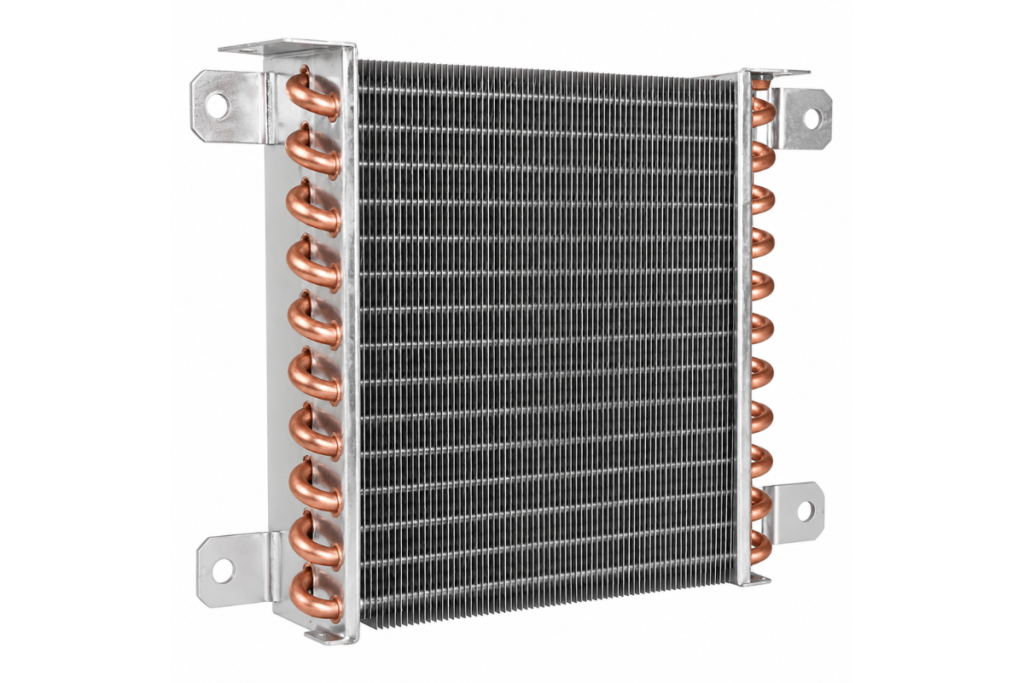
Standard coils serve the applications they were designed for well. When the application falls outside that design envelope in dimensions, materials, pressure ratings, or geometric configuration, custom coils are not an upgrade; they’re the correct specification. For UAE facilities managing cooling systems across marine, industrial, oil and gas, pharmaceutical, and commercial applications, Viking Emirates Radiators‘ custom coil manufacturing capability in Sharjah provides the lead time, specification flexibility, and material range that sourcing from overseas catalogue suppliers cannot match. Visit our website to browse our complete range or get in touch with our team at +971 55 654 9544.